


The words “single-account” and “multi-account” seem simple, but an announcement is not always enough to know what they allow in practice. The rule may concern the number of accounts used at the same time, a connection, or some other condition that the server needs to explain. Before choosing an offer, look for the full wording, the scope of the rule and its date rather than interpreting the word on its own.
The public pages consulted do not define a universal standard for all games or projects. They provide examples to examine: the DOFUS Retro page talks about its seasonal servers and a new character, while the Stasis listing on a directory describes itself as single-account. These statements are not interchangeable and do not confirm the rules of any other service.
Useful definitions
An account refers to access linked to a service identity; a character is a game element attached to an account or to a progression in the game. These two words are therefore not synonyms. “Single-account” may be used to describe a limit on simultaneous use, but you need to check whether the announcement refers to one account per person, a single active connection, a character or some other restriction. The term, taken in isolation, does not provide all these details.
“Multi-account” generally signals that several accounts can be used, but the concrete scope still has to be read in the rules of the offer concerned. The rule may specify exceptions, technical limits or an authorised way of playing together. Do not assume that a specific number of windows, characters or connections is allowed if the page does not say so.
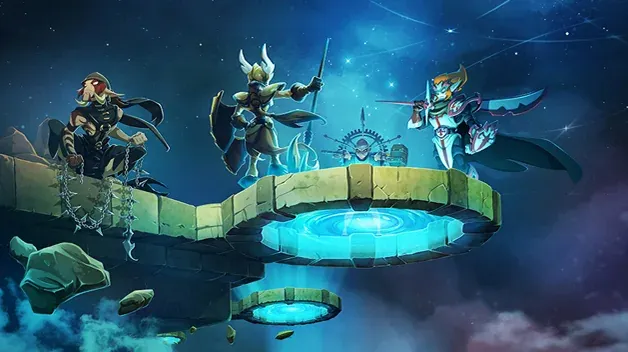
The DOFUS Retro seasonal servers page notably presents the idea of starting from scratch with a new character. This presentation gives a reference point for the progression announced for these servers; it is not enough to establish a general policy on the number of connected accounts. A similarity in vocabulary does not replace the text of a rule.
Reading what the rule actually allows
First look for a rules page or FAQ published by the service, then note the exact words that define the limit. The decisive question is often “what happens if…?”: can several accounts be connected at the same time? Does the rule depend on the person, the household or the machine? Are a game connection and a website account treated the same way? If no answer is given, note that the information is not published.
Also check who is speaking. A sentence on the project’s website is a statement by that project; a directory listing may repeat or summarise it, but that does not make it a complete rule. On the Stasis listing consulted on 13 October 2026, the project presented itself as “single-account” within a semi-like offer. This is a public statement displayed in a directory, not an independent verification of the technical conditions nor a rule applicable to other projects.
The date matters: an old announcement may have been replaced by a more recent rule. Open the link to the project’s website when possible and look for the terms, the team’s answers and the update notes. If the directory listing and the project’s rules seem to differ, do not pick the one that suits you; ask the team concerned for clarification before committing.
Possible effects on how a team organises itself
The account model can influence how a person plans their sessions, but it does not on its own describe the full experience. Someone who prefers to focus on one character may look for a rule that regulates multiple connections. Someone who plays with friends may mainly want to understand how the rule applies to groups and to each participant’s connections. These preferences are selection criteria, not a measure of the server’s quality.
Do not confuse team organisation with account rules. A “single-account” announcement does not guarantee that every activity requires a group, nor that a player will always have company; “multi-account” does not prove that a player can complete every activity alone. These conclusions require separate gameplay information. If they matter to you, look for rules and guides that precisely describe the content concerned, with a version and a date.
Before comparing offers, write down two or three situations that match how you play: playing alone, joining people you know, switching between several characters or sharing a device. For each one, look for an explicit answer. A list of questions helps more than a slogan, because it shows you which information is missing before you make a decision.
Checking the server’s current rule
Reread the rules page at the time you choose your service, then compare it with the presentation page and recent notes. A public listing can make an offer discoverable, but the detailed terms must be sought from the project that announces them. If a rule is not available, write “not specified” in your comparison: do not turn a lack of information into a permission or a prohibition.
Apply the same check to every offer. Note the term used, the allowed behaviour, the stated exceptions, the publication date and the link where the rule is defined. For a third-party project, do not transpose a rule from an official server or from another private server. The comparison guide to Dofus 3 server offers details other criteria to check in the same way.
Togu is a private server not affiliated with Ankama; its rules should be consulted on its own public pages when they are available. To continue, browse the comparisons hub, the published rules and our Dofus 3 beginner’s guide. A sound decision does not come from the word “single” or “multi” alone: it comes from a precise rule, an identifiable source and a date you can verify.